
Indigenous Women in BARMM Are Building Food Security. A New WFP-Backed Project Is Supporting Them.
AGREA Foundation is partnering with the World Food Programme to support Indigenous and rural women in BARMM through nutrition-sensitive agriculture, climate-resilient training, and market-linked cooperatives.

The work is already underway
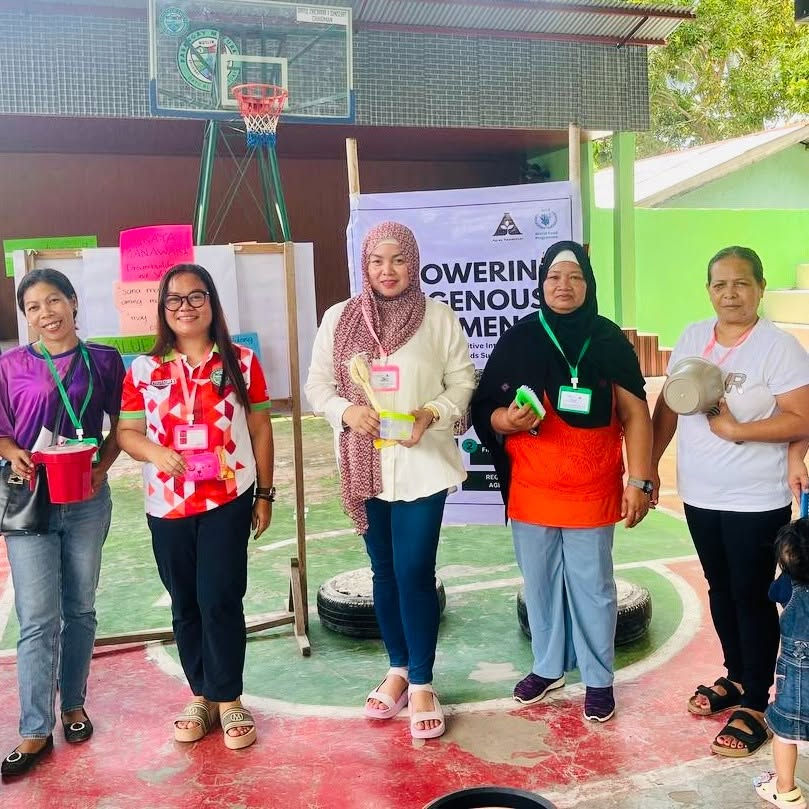
In Maguindanao del Norte and Maguindanao del Sur, women's associations and cooperatives are not waiting for a program to tell them what their communities need. They are already organizing: pooling resources, managing farms, processing produce, and feeding their neighbours. What they often lack is not initiative but access—to training, to markets, to the kind of sustained support that turns a strong local effort into a durable livelihood.
A project supported by the United Nations World Food Programme (WFP) and implemented in partnership with AGREA Foundation is designed to address that gap. Its official title is Empowering Indigenous Women through Nutrition-sensitive Interventions and Agriculture Livelihoods Support towards Improved Food and Nutrition Security and Climate Resilience. The project is funded by the Spanish Agency for International Development Cooperation (AECID), with a contribution of PHP 45 million (approximately USD 780,000), and aims to reach 28,000 people from Indigenous and rural communities across the Bangsamoro Autonomous Region in Muslim Mindanao (BARMM).
The project is not starting from zero. It builds on existing women-led organizations in Maguindanao del Norte and Maguindanao del Sur, groups that already have membership, trust, and local knowledge. The role of the project is to strengthen what they have built and connect it to wider systems.
Why BARMM, and why Indigenous women
BARMM carries a disproportionate burden of food insecurity and malnutrition in the Philippines. A 2023 WFP case study found that approximately 49 percent of individuals in the region experience chronic malnutrition. Child stunting in BARMM has been among the highest in the country. These are not abstract statistics. They describe children whose growth is compromised, households whose food intake is insufficient, and communities where the causes of malnutrition are structural: poverty, limited access to nutritious food, climate shocks, and the long shadow of conflict.
Indigenous and rural women sit at the intersection of these pressures. A 2024 WFP study, Leaving No One Behind, found that climate-related risks and other barriers hinder rural and Indigenous women from accessing resources and decision-making processes, resulting in lost livelihood opportunities and poverty. Women in these communities often carry the responsibility for food preparation and child care while being excluded from the decisions that shape land use, agricultural support, and market access.
The project's design responds to that diagnosis. It is not a general agriculture program with a women's component added on. It is built around the specific constraints that Indigenous and rural women face: limited climate resilience, weak market linkages, and insufficient voice in community planning.
What the project does
The AECID-funded project operates through three connected areas of work.
Climate-resilient agriculture and leadership training. Rural and Indigenous women will undergo training in climate-resilient agriculture and leadership skills. This is practical instruction: how to manage crops under changing rainfall patterns, how to reduce risk, how to make decisions that protect both harvest and household. The leadership component recognizes that technical skill alone does not change women's position in their communities; voice and confidence do.
Strengthening women's cooperatives and linking them to markets. The project aims to strengthen women's cooperatives by linking their agricultural production to reliable markets. This is a departure from interventions that stop at production. A cooperative that grows more food but cannot sell it consistently has not solved its members' income problem. The project's market-linkage focus is intended to make the production side meaningful in economic terms.
Social and behavior change for nutrition. The activities incorporate social and behavior change to improve local food and nutrition practices. This is nutrition-sensitive agriculture in practice: not only producing food, but producing the right food and ensuring it reaches the people who need it most, particularly children and pregnant or breastfeeding women.

AGREA's role: analysis, partnership, and implementation support
AGREA Foundation's contribution to the project is anchored in a specific piece of analytical work. AGREA and WFP conducted an Intersectional Gender Analysis (IGA) across BARMM, examining how gender intersects with other factors—ethnicity, location, livelihood, age—to shape women's access to resources and participation in community life.
The analysis was not an academic exercise. It was designed to inform the project's action plan for supporting Indigenous and rural women. In December 2025, WFP, the Bangsamoro Women Commission, and AGREA Foundation brought together researchers and stakeholders in Cotabato City for workshops on the IGA and on Social and Behaviour Change (SBC) strategy. Participants included representatives from the University of Southern Mindanao, Mindanao State University–Maguindanao, and the Bangsamoro Women Commission. The workshop concluded with a challenge from the Bangsamoro Women Commission to use the new skills to champion inclusive development across BARMM.
The BARMM Government, AGREA Foundation, and WFP also co-organized a validation workshop on the Intersectional Gender Analysis, informing the action plan to support Indigenous and rural women. This sequencing matters: the analysis came first, and the project's design was shaped by what it found.
The cooperatives and associations at the center
The project works through existing women-led organizations across two provinces. In Maguindanao del Norte, partners include:
Macarpes Women's Association in Matanog
Bagusan Sur Kalimudan O'Bae Association in Nangi, Upi
Serodoroy De Teduray Dob Fusakae Women's Association in Nangi, Upi
Matuber Women's Organization in Matuber, Datu Blah Sinsuat
In Maguindanao del Sur, partners include:
Gadungan SSB & Ummahat Mu'minats Agriculture Cooperative in Sultan sa Barongis
Kuliglig Bangsamoro Women Agriculture Cooperative in Rempes, Upi
STK Farmers Association in Datu Abdullah Sangki
These are not generic beneficiary lists. They are organized groups with their own histories, leadership, and membership. The Gadungan SSB & Ummahat Mu'minats Agriculture Cooperative, for example, has been documented as a recipient of agricultural support from the Ministry of Agriculture, Fisheries and Agrarian Reform in BARMM, indicating that it is an active, recognized local institution rather than a project-created entity.
The project's approach is to work with these groups as partners—strengthening their capacity, connecting them to markets, and supporting their members' training—rather than treating them as passive recipients.
What success would look like
The project's stated aims are clear: stronger livelihoods for Indigenous and rural women, improved family nutrition, and more resilient and self-sustaining communities. Those are medium- and long-term outcomes. They will not be achieved within a single project cycle, and they should not be claimed before the evidence exists.
What can be observed in the near term is whether the training reaches the women it is intended for, whether cooperatives are able to access markets on better terms, whether nutrition practices change at the household level, and whether women's participation in community decision-making increases. Those are the intermediate markers that will indicate whether the project is on track.
The broader significance is systemic. BARMM's food and nutrition challenges are not caused by a lack of women willing to work. They are caused by structures that make that work harder: limited access to resources, weak market infrastructure, climate vulnerability, and governance processes that have not consistently included Indigenous and rural women. A project that strengthens women's cooperatives and connects them to markets is, in practical terms, an intervention in those structures.
Learn more
To learn more about AGREA Foundation's work with Indigenous and rural women in BARMM, and its partnership with the World Food Programme, explore the organization's official channels. Organizations interested in supporting this work or learning about the Intersectional Gender Analysis can reach out through AGREA's contact page.


